
Behavior problems in dogs and cats
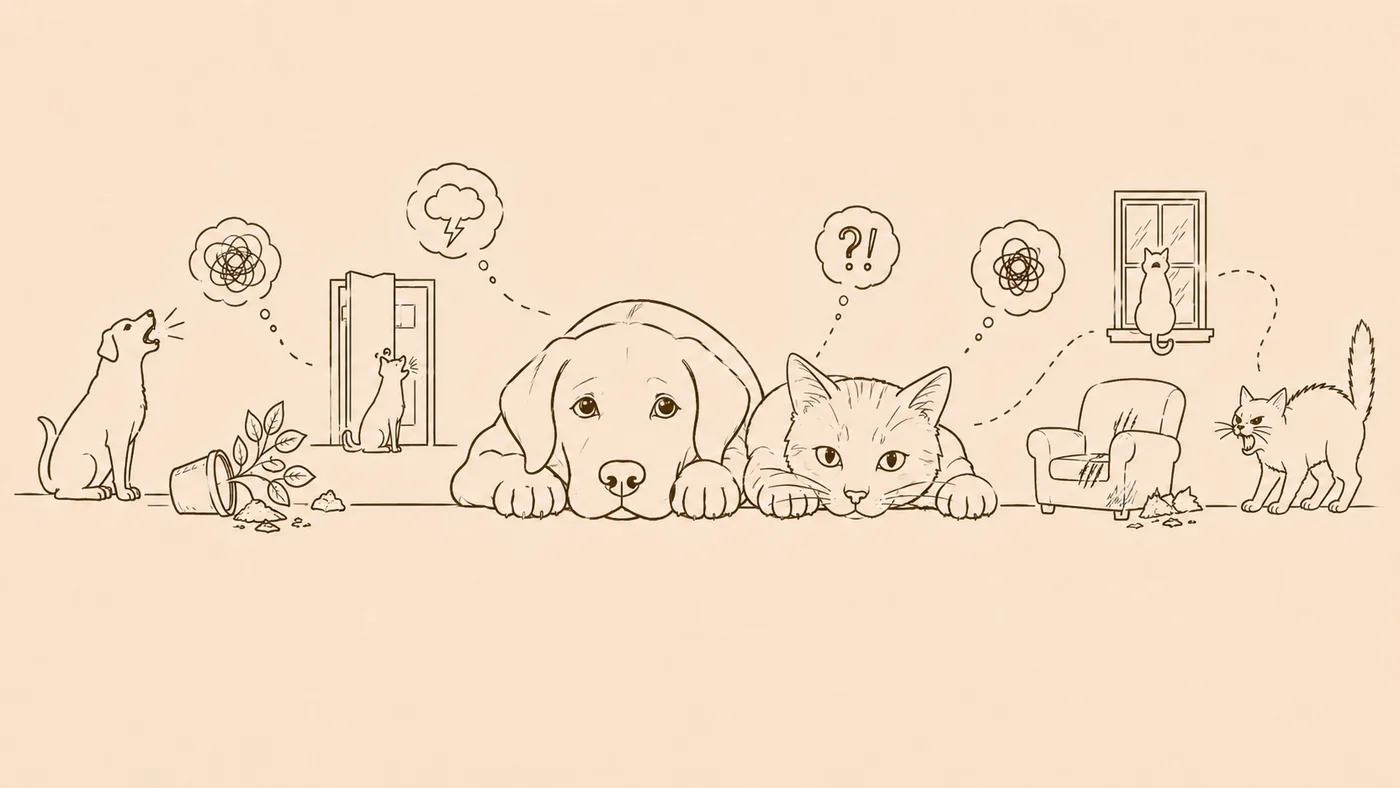
My dog has suddenly become aggressive. My cat is no longer house-trained. My dog destroys everything as soon as I leave. If any of these situations sounds familiar, know that these behavior problems, however unsettling, are almost never down to chance, whim or "bad will" on your pet's part.
Every behavior has a specific origin, whether emotional, environmental or sometimes medical. Understanding it is the essential first step before considering any behavioral support: two animals showing what looks like the same behavior can have completely different needs.
As a dog and cat behaviorist since 2007, I support owners facing the most common behavior problems:
- Aggression in dogs and cats (fear, resource guarding, territory…)
- Separation anxiety and hyper-attachment
- House soiling in adult dogs, puppies and cats
- Excessive barking and meowing
- Fears, phobias and deprivation syndrome
- Living together: between animals, and between pets and children
- Puberty and adolescence in dogs and cats
- Age-related behavior problems (involutional depression, cognitive decline in seniors)
- A new family member in the home (baby, new pet, house move)
These articles can never replace personalized support that takes into account your pet's own history, temperament and environment.
If one of these situations sounds familiar, a consultation helps you go further: identifying the exact origin of the problem and putting in place behavioral support suited to your dog or cat.
This information is in no way a substitute for veterinary advice. Any sudden change in behavior or any concern about your pet's health should always lead you to see your vet first.